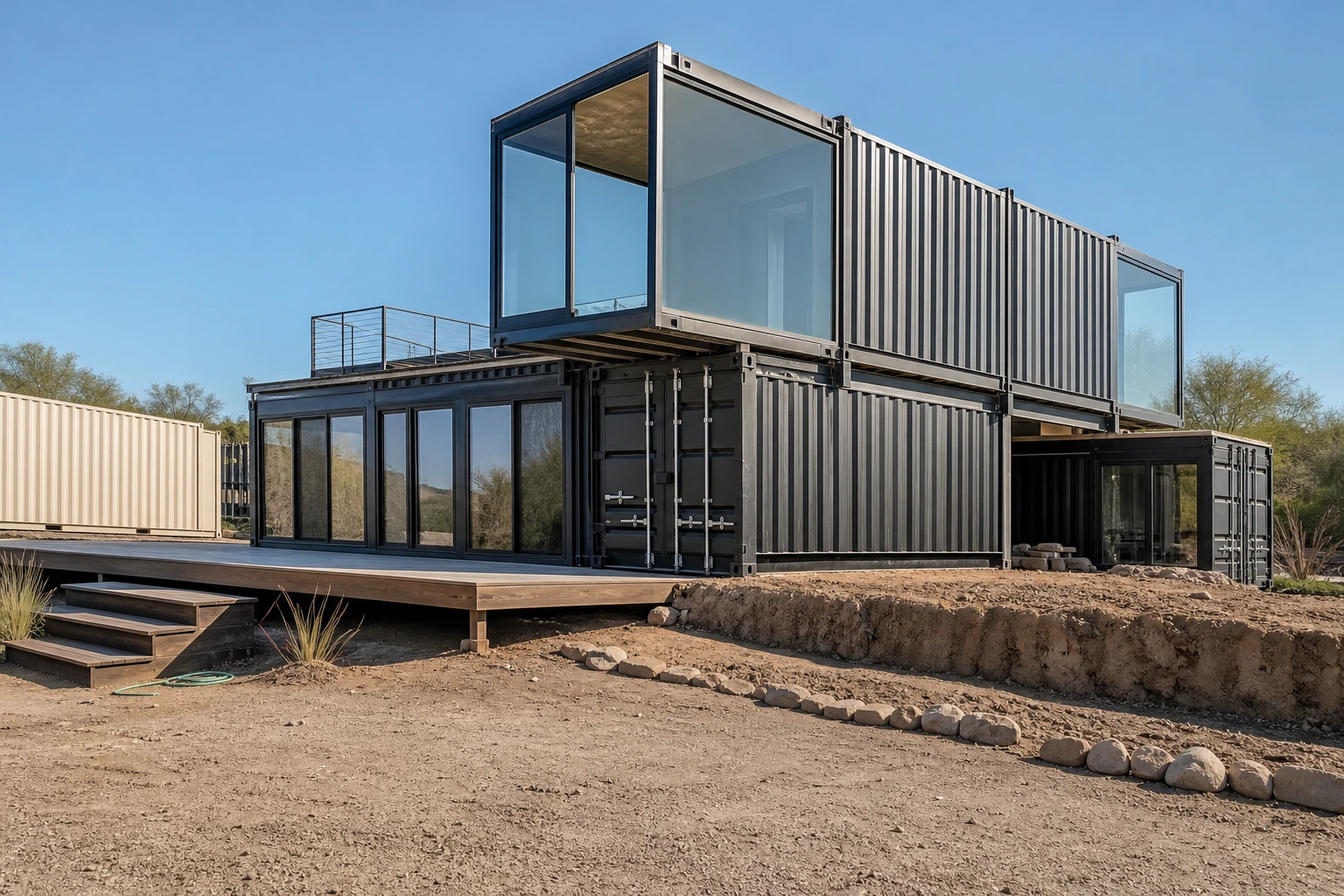
We’ve found the land, picked out containers and started imagining the finished home. Then a question about electricity reveals a problem: we may not be able to have the containers delivered yet.
That’s the setback described in this project from Think Outside the Container. The builder had received a general answer that a container home was allowed, but later discovered additional restrictions affecting placement, utilities and temporary accommodation.
The video describes one builder’s experience with his local county. Those requirements aren’t universal, but they give us a useful list of questions to ask before committing to a build.
1. Can we build this particular container home on this property?
“Do you allow shipping container homes?” is a starting question, but it doesn’t resolve the details of our project.
We need to explain the intended use, layout and property location. A general answer about container construction may not address the parcel’s zoning, setbacks or other restrictions.
We ask what approval process applies to the proposed home and what information the department needs to assess it.
Getting those details early helps us move from an interesting idea to a workable plan.
2. Can we place empty containers on the land before approval?
In the source project, the builder had already reserved containers and expected to take delivery after acquiring the land.
He then reported being told that even the empty containers couldn’t be placed on the property before the building permit was issued.
We ask about placement separately from construction. Permission to build a finished home doesn’t necessarily answer when we can bring its components onto the site.
We also describe whether the containers will serve as building components, temporary storage or another use, so the answer addresses our actual plan.
3. What drawings and engineering documents do we need?
The builder described needing a completed home design and engineering approval before obtaining his building permit.
That created a scheduling problem because the containers were ready before the plans were.
We request the application checklist early and confirm which drawings, calculations and professional approvals are required for our project.
The container layout, openings, reinforcement and foundation need to be coordinated in the design. We account for that work before promising a delivery date.
4. When can electrical service be installed?
The permitting discussion began when the builder asked how to bring power from across the street onto his property.
He reported being told that electrical service had to wait until the building permit was obtained.
We ask about permanent service and temporary construction power separately. We also confirm which steps belong to the building department and which belong to the utility provider.
That helps us understand what power will be available during site preparation and construction, rather than discovering the limitations after work begins.
5. What site preparation can we complete beforehand?
Clearing vegetation, grading, installing a fence and arranging a survey are different activities. We shouldn’t assume they all follow the same approval process.
In the video, the county’s response distinguished basic vegetation maintenance from other work and mentioned a separate fence permit.
We provide a specific list of the tasks we intend to complete and ask which can proceed before the building permit.
Clear questions produce more useful answers than asking whether we can generally “start working on the land.”
6. Can we stay on the property during construction?
The builder had considered sleeping in a vehicle or temporarily fitting out part of a container while building the home.
He then reported that overnight stays were restricted and that an RV arrangement would require a separate permit.
We confirm temporary accommodation before including it in the construction plan. Camping, staying in an RV and occupying an unfinished container may be treated differently.
Knowing what’s permitted also helps us budget for accommodation elsewhere if staying on-site isn’t an option.
7. What applies if we want to build the home ourselves?
The source project was intended as an owner-built home, making the builder’s role another important part of the approval discussion.
We ask how the local process applies to the work we want to perform personally and what responsibilities come with that arrangement.
We also clarify how inspections and specialist trades fit into the project.
Doing some work ourselves can be part of the plan, but we need to understand the applicable process before setting the schedule around it.
8. What happens to our order if approvals take longer?
A permitting delay can affect more than the construction start date.
In this project, the builder had asked the supplier to hold the containers for a few weeks. The newly discovered requirements extended the expected wait.
Before reserving containers, we discuss holding periods, storage charges and delivery rescheduling with the supplier. We confirm those terms alongside the approval timeline.
Keeping some flexibility between ordering and placement helps us manage changes without rushing the design.
Get the answers before scheduling delivery
This project’s biggest lesson is that a general “yes” to container homes wasn’t the same as a complete explanation of how the build could proceed.
We ask about the property, container placement, design documents, utilities, preliminary work and accommodation as separate questions. We keep the responses and request clarification where the requirements remain unclear.
At Quality Containers, we help customers explore container options and modification needs. Contact our team to discuss your project and delivery plans while you confirm the site’s approval requirements with the relevant local offices.
Adapted from Think Outside the Container’s “Permits for Shipping Container Home! | TOTC Ep. 7.” The permitting restrictions described are the builder’s reported experience, not a statement of current requirements for every location.