A shipping container home in the mountains or near the coast sounds like a dream. But choosing the wrong property can create expensive problems before construction even begins.
At Quality Containers, we encourage customers to think about the location, delivery and intended use together. A beautiful piece of land needs to work for the build, too.
Here are nine things to check before deciding where to build your shipping container home.
1. Start your search near container suppliers
The source video highlights port cities as starting points for finding shipping containers. Its examples include Seattle, Portland, Oakland, Los Angeles, Houston, Miami, Jacksonville, Savannah and Charleston.
These places can give us a starting point for supplier research, but they aren’t a ranking of cities that approve container homes.
We first identify suppliers serving the area, then ask about the size and condition of containers available for our project.
2. Compare the delivered price
A low container price doesn’t necessarily mean a low total purchase cost.
We request quotes that include transportation to the actual property and explain what unloading includes. If separate equipment is needed to place the container, we account for that expense as well.
We also confirm where the container will ship from. The closest port may not be the supplier’s pickup location.
3. Check whether the delivery truck can reach the site
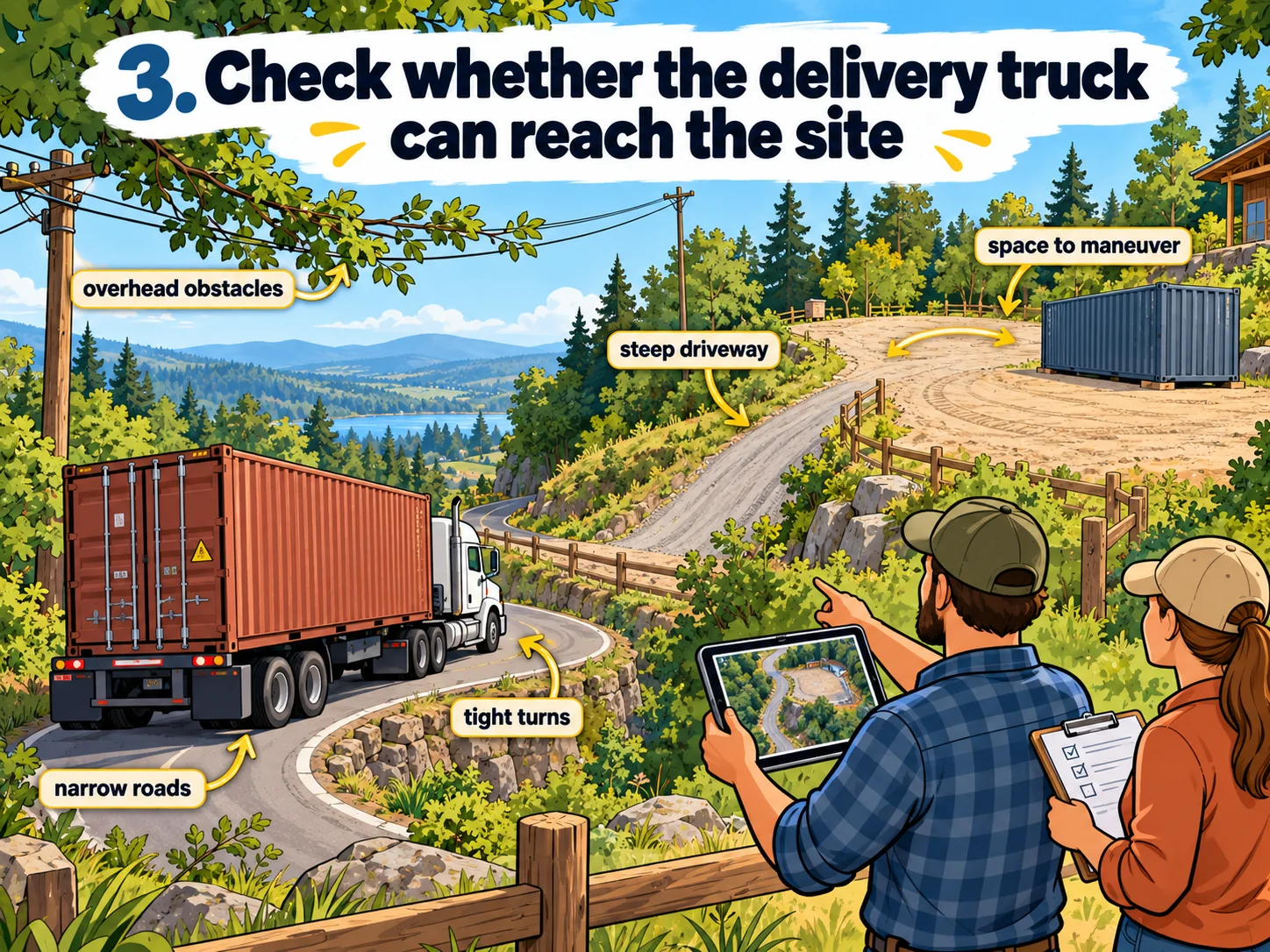
Before committing to a property, we consider the route a delivery vehicle will need to follow.
Narrow roads, tight turns, steep driveways and overhead obstacles can complicate access. The truck also needs space to maneuver at the destination.
We share site photos and measurements with the delivery team early so they can assess the proposed route and unloading area.
 4. Plan how the container will reach its foundation
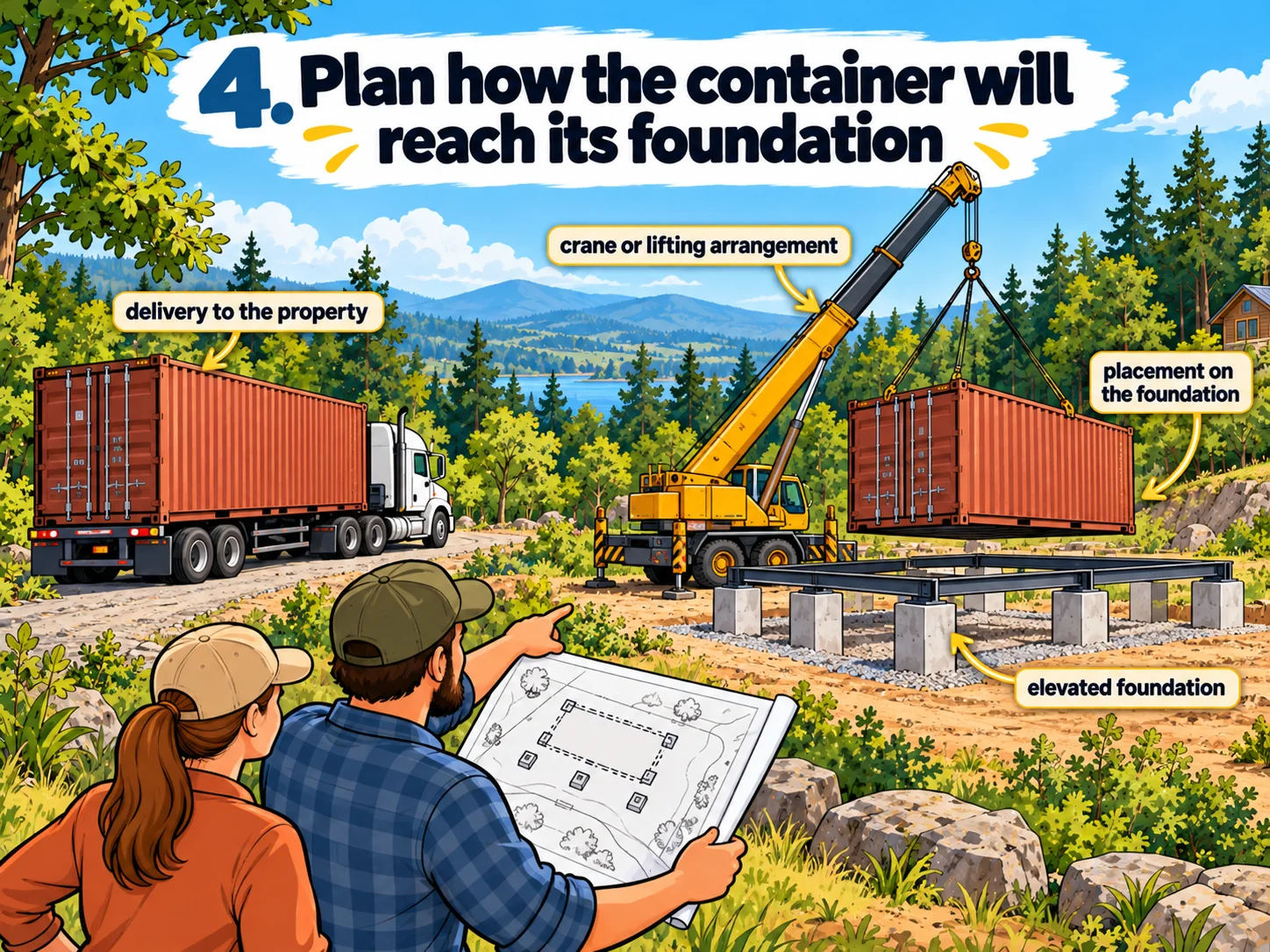
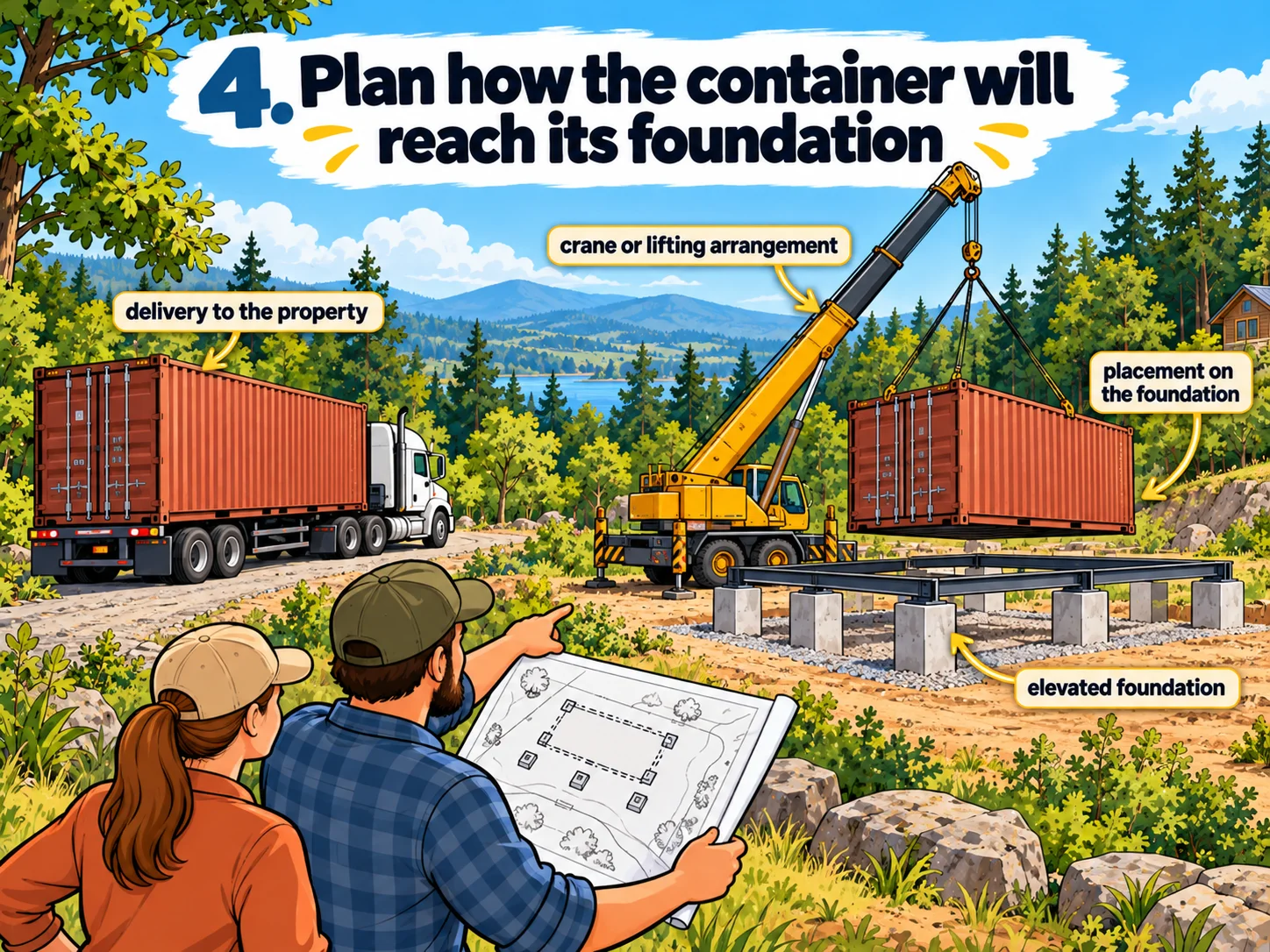
Delivery to the property and placement on the foundation are separate considerations.
The delivery equipment may be able to handle both, or the project may require a crane or another lifting arrangement.
We coordinate the foundation position with the placement plan, particularly for stacked containers, elevated foundations or locations beyond the truck’s unloading reach.
 5. Budget for remote locations
A secluded mountain or wooded property can be appealing, but reaching it may require additional work.
We consider driveway improvements, grading, equipment access and the distance from suppliers and contractors.
Before choosing remote land for its lower purchase price, we estimate what it will take to prepare it for delivery and construction.
6. Confirm that the proposed home can be approved
Container availability doesn’t tell us whether we can build a home on a particular parcel.
We contact the relevant planning and building offices about the intended project before buying. We also review property-specific restrictions, including deed restrictions and neighborhood covenants.
An existing container home nearby doesn’t establish approval for our property. We need answers tied to the parcel and proposed use.
7. Check utilities and drainage
Land costs are only part of the location budget.
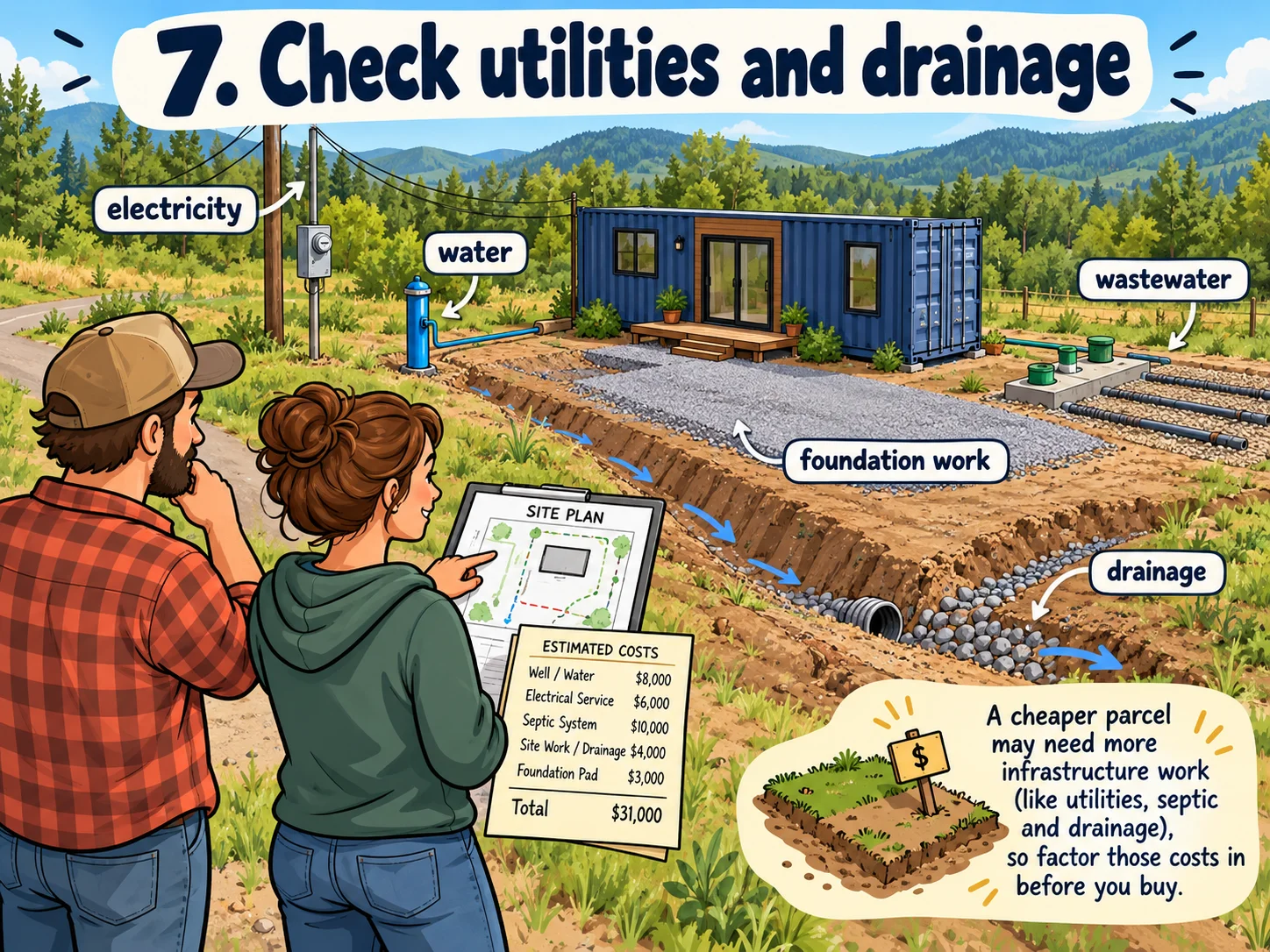
We need to understand how the home will receive water and electricity, how wastewater will be handled, and what drainage and foundation work the site requires.
A cheaper parcel may need substantial infrastructure work. We compare the complete preparation costs alongside the asking price.
 8. Choose the setting around your priorities
There isn’t one best town for every shipping container home.
We might prioritize convenient access, nearby suppliers and existing utilities. Or we might place more value on privacy and scenery, accepting additional site work.
Writing down those priorities helps us compare properties consistently instead of choosing based on the view alone.
9. Discuss delivery before purchasing the container
Before placing an order, we bring the container specifications and site information together.
We confirm the size, condition, delivery destination, access requirements and planned placement method. That helps us identify problems while there’s still time to adjust the plan.
At Quality Containers, we help customers explore container options for their projects. Contact our team with your location and intended use to discuss your next steps.
Adapted from “A Comprehensive List: The Best Towns to Build a Shipping Container House.”